


13 October, 2026
“`html
“`
WordPress or Custom Development? Which Option Should You Choose?
Choosing the right technology to build a website is one of the most important decisions for a business. WordPress and custom development are two options for creating professional digital solutions, but they differ significantly in terms of flexibility, costs, features, maintenance and growth potential. So, is it better to build a website with WordPress or develop a solution from scratch? The answer depends on the business’s needs, the project’s objectives, the required features and the company’s expected growth. In this article, we analyse the main differences between WordPress and custom development to help you choose the most suitable option for your business.What Is WordPress and What Is It Used For?
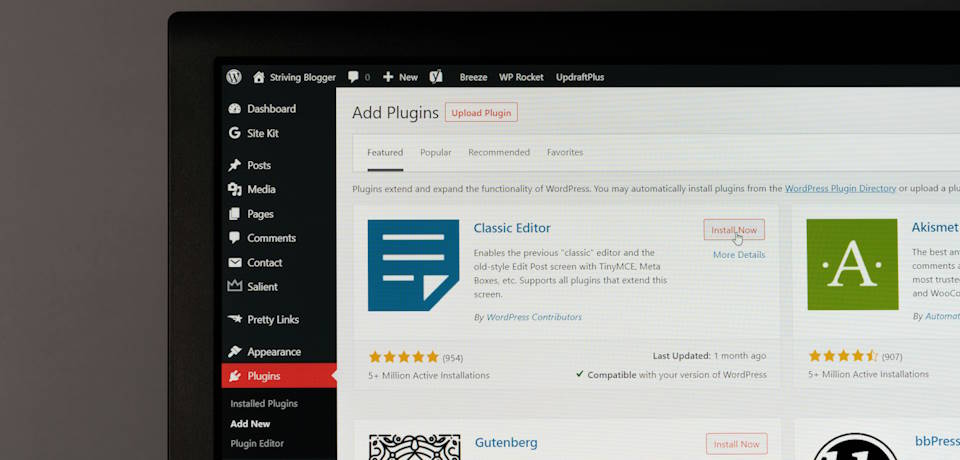
WordPress is a content management system (CMS) that allows you to create and manage websites without having to develop the entire structure from scratch. It is one of the most widely used solutions for building corporate websites, blogs, service pages and other digital projects. One of its main advantages is that it provides a flexible technological foundation that can be extended through themes, plugins and custom development. This makes it possible to adapt a website to a wide range of business needs without having to programme every feature from the beginning. WordPress also makes day-to-day content management easier. A business can update text, images, pages and articles through an administration dashboard, without necessarily relying on a developer for every change. For these reasons, WordPress can be an excellent option for businesses that need a professional, easy-to-manage website that is ready for SEO.What Is Custom Web Development?
Custom web development involves creating a digital solution specifically tailored to a business’s needs. Instead of starting with a general-purpose system such as WordPress, the project is designed and programmed to meet specific requirements. This approach can be suitable when particular features, specific business processes, complex integrations or tools that do not fit well with available standard solutions are required. For example, a business may need a platform to manage customers, automate internal tasks, access real-time information or connect different business systems. In these cases, a custom-developed web application can provide a solution that better suits the way the business operates. Custom development also allows you to decide how the system architecture is organised, which features it includes and how its different components interact. However, it requires more detailed technical planning and an initial investment that may be higher than that of a conventional website.What Are the Differences Between WordPress and Custom Development?
Although both options allow you to create professional digital solutions, they take different approaches. WordPress is based on an existing platform that can be customised and extended according to the project’s needs. Custom development, on the other hand, allows you to build a specific solution from the ground up, starting with its initial architecture. In general, the main differences relate to aspects such as:- The initial cost of the project.
- The time required to develop and launch the website.
- The flexibility to add specific features.
- How easily content can be managed and updated.
- The possibilities for integration with other systems.
- Maintenance and technological development.
- The ability to adapt to business growth.
Which Option Is More Affordable?
For many corporate projects, WordPress can reduce the initial investment because it is based on an existing structure and offers a wide range of themes and plugins. This can speed up development and eliminate the need to programme common features from scratch. However, the final cost depends on the design, features, integrations and level of customisation required by the website. A WordPress project involving extensive modifications, premium plugins and specific development work can also require a considerable investment. Custom development usually requires more hours of analysis, design, programming and testing. As a result, its initial cost may be higher, particularly when the project involves complex processes or exclusive features. Even so, the initial price should not be the only factor to consider. It is also worth assessing maintenance, future extensions and the cost of adapting the solution to the business’s needs.Which Option Allows You to Build a Website Faster?
WordPress usually makes it possible to develop and launch a website more quickly when dealing with a conventional corporate project. The availability of existing tools and features simplifies the creation of pages, forms, blogs and other standard sections. With custom development, the architecture must first be defined, the solution designed, the features programmed and everything tested to ensure it works correctly. The time required depends on the project’s complexity and the established requirements. However, a highly customised WordPress website can also require considerable development time. Similarly, a relatively simple custom application can be built within a reasonable timeframe if the requirements are clearly defined. The key is to choose a technology that allows you to develop the right solution without adding unnecessary complexity.Can WordPress Be Used to Customise a Professional Website?
Yes. WordPress allows you to customise a website both visually and functionally. You can adapt the design to your corporate identity, create dedicated pages for each service, add forms, publish content and integrate different tools through plugins or custom programming. You can also develop bespoke features to meet a business’s specific needs while keeping WordPress as the foundation of the project. This means that not every WordPress website has to use a standard template or offer the same features. With proper planning and suitable development, the platform can be adapted to many different types of business projects. However, when functional requirements are highly specific or demand a completely different architecture, it may be more appropriate to consider a custom-developed solution.When Should You Choose Custom Web Development?
Custom development is particularly useful when a business needs features that cannot be implemented efficiently using a conventional platform. It can be a good option for projects that require proprietary business processes, advanced data management, automation, complex integrations or access systems with different user roles. Examples of projects that may benefit from this approach include:- Web applications for managing a company’s internal processes.
- Private platforms for customers, suppliers or employees.
- Booking systems with specific operational rules.
- Management tools that connect different business software applications.
- Platforms with exclusive features that do not fit standard solutions.
- Applications that need to evolve alongside the business’s own processes.
Which Option Is Better for SEO?
Both WordPress and custom development can achieve good SEO results. The technology used does not, by itself, guarantee that a website will appear in Google’s top search results. In both cases, it is necessary to work on aspects such as URL structure, titles, content, internal links, page loading speed, mobile responsiveness and user experience. WordPress offers tools and plugins that simplify the management of many SEO elements, as well as content publishing and the creation of pages targeting specific search queries. With custom development, the level of technical control can be extensive, but it is important to design the architecture with SEO requirements in mind from the outset. A poorly planned custom solution can also cause indexing, performance or content management problems. Therefore, the best option is the one that allows you to implement an effective SEO strategy and maintain it properly over time. If you want to improve your business’s visibility on Google, you can explore our SEO services for businesses.Which Option Is Better for Small and Medium-Sized Businesses?
For many small and medium-sized businesses, WordPress is a suitable option because it allows them to create a professional corporate website, showcase their services, publish articles and generate leads without developing the entire platform from scratch. It is also an interesting choice for businesses that want to work on their digital marketing through their website and update their content regularly. On the other hand, a business that needs to automate processes, manage specific operations or provide its own digital tools may benefit from custom development. In some cases, both options can be combined. For example, a business can use WordPress for its corporate website and develop a separate application to manage certain internal processes. The decision should be based on current needs, the available budget and growth objectives, avoiding investment in a solution that is more complex than the business actually requires.What Maintenance Does Each Option Require?
WordPress requires regular updates to its core software, themes and plugins, as well as backups, security measures and compatibility checks. It is also important to verify that the website continues to work correctly after updates. With custom development, maintenance depends on the technology used and the project’s architecture. It may include dependency updates, bug fixes, security improvements, performance monitoring and adjustments to meet new requirements. Neither option is maintenance-free. The difference lies in the tasks required and who is responsible for carrying them out. Planning maintenance from the beginning helps reduce risks, preserve performance and prevent the website or application from becoming obsolete. You can explore our WordPress website maintenance for businesses service if you need to keep your website updated and secure.Can You Build an Online Store with WordPress, or Is Custom Development Better?
For many businesses that want to sell products online, WordPress combined with WooCommerce can be a practical option. It allows you to manage products, categories, orders, payments and shipping, while also integrating the store with a corporate website and a content strategy. When a business requires highly specific sales processes, complex integrations or commercial logic that does not fit the available tools, it may be worth considering a custom-developed solution. The choice will depend on the product catalogue, pricing rules, stock management, integrations with other systems and the business’s logistical requirements. Before making a decision, it is advisable to analyse how the store will operate day to day and which features will be required in the medium and long term. You can explore our online store development for businesses solutions to assess which approach best suits your project.WordPress or Custom Development for a Business in Vilanova i la Geltrú?
For a business in Vilanova i la Geltrú that wants to improve its online presence, WordPress can be a good option if it needs a professional corporate website, a service page or a content platform designed to generate leads. For example, a professional firm, a local shop or a service-based business may primarily need a clear, fast, mobile-friendly website that is ready for local SEO. By contrast, a business that needs to manage its own operations, connect different systems or create an exclusive digital tool may require a custom web application. Location does not determine which technology is best. What matters is understanding the business’s needs, how it wants to attract customers and which features the digital solution must provide.What Should You Consider Before Choosing?
Before deciding between WordPress and custom development, it is advisable to define the project’s requirements and assess the following aspects:- The main objective of the website or application.
- The features required at launch.
- The initial budget and maintenance costs.
- The planned project launch date.
- The need to integrate with other software or platforms.
- How frequently the content will be updated.
- SEO and lead generation requirements.
- Security and user management requirements.
- Potential extensions and future business needs.
- The technical resources available to maintain the solution.